Desecrated Geometry: Part II
Desecrated Geometry: Part II continues the deconstruction of sacred forms. Where the first series revealed how symbols become corrupted through cultural overreach and myth, this new body of work turns the gaze inward, examining the artist’s own hand in that act of appropriation.
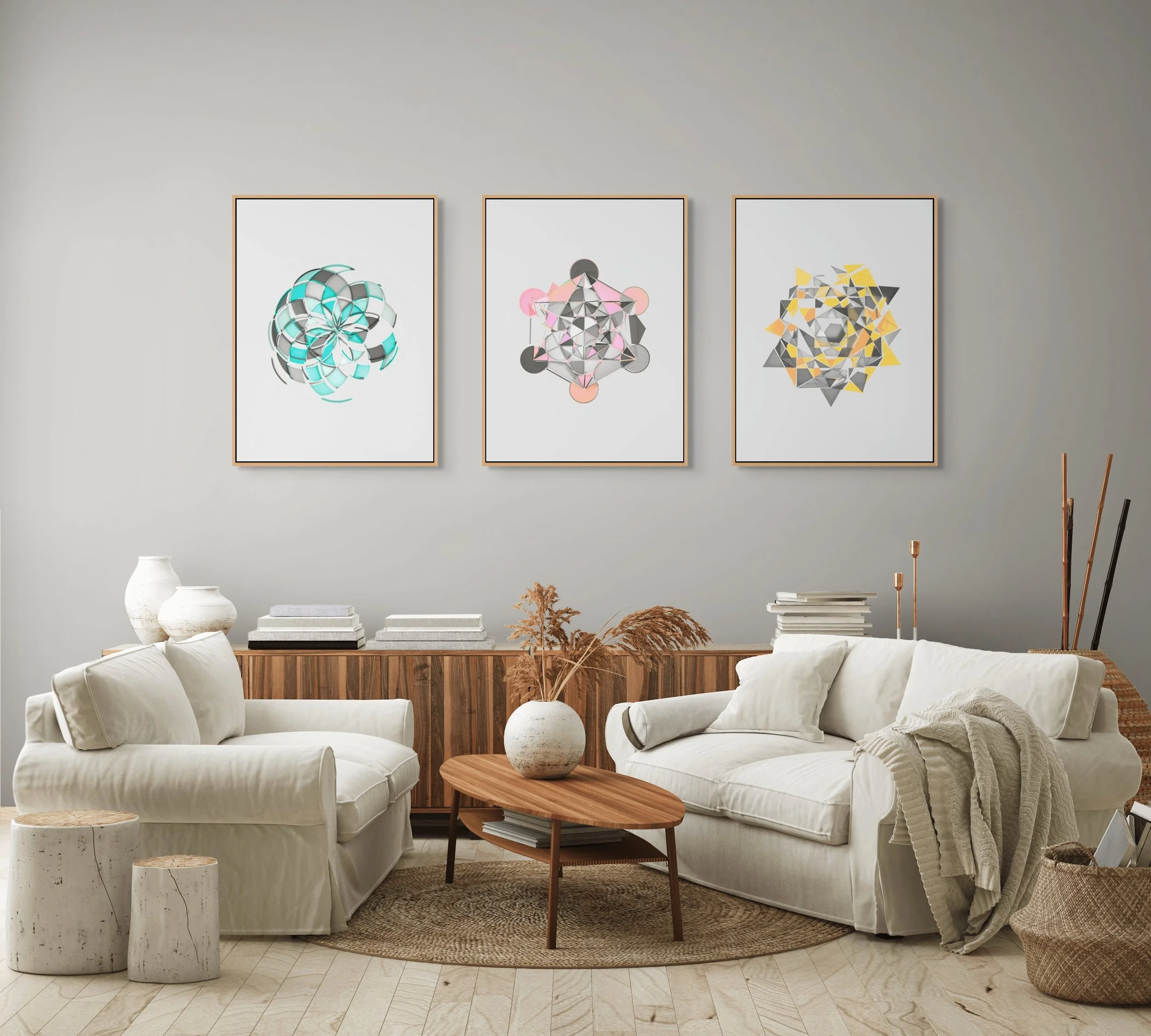
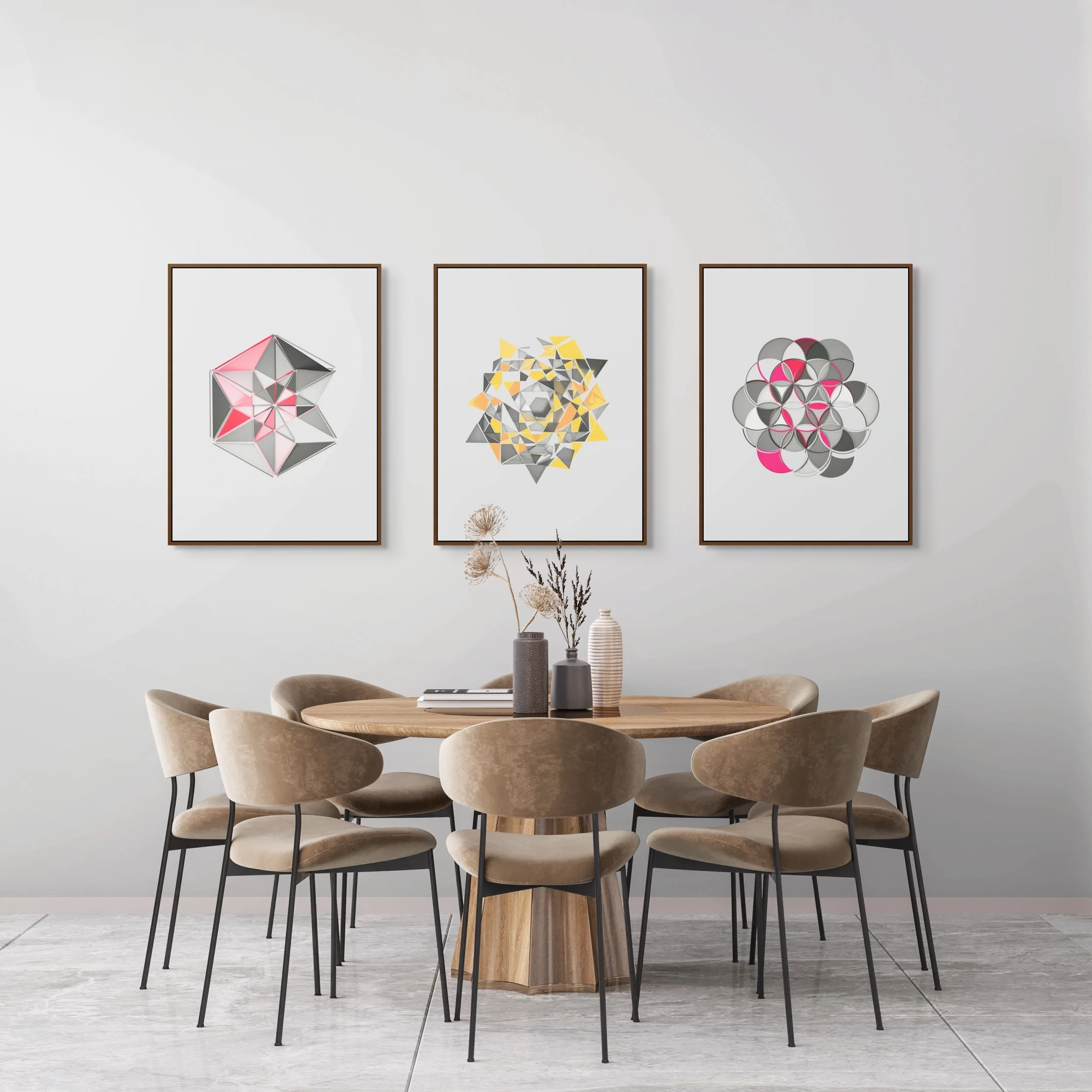
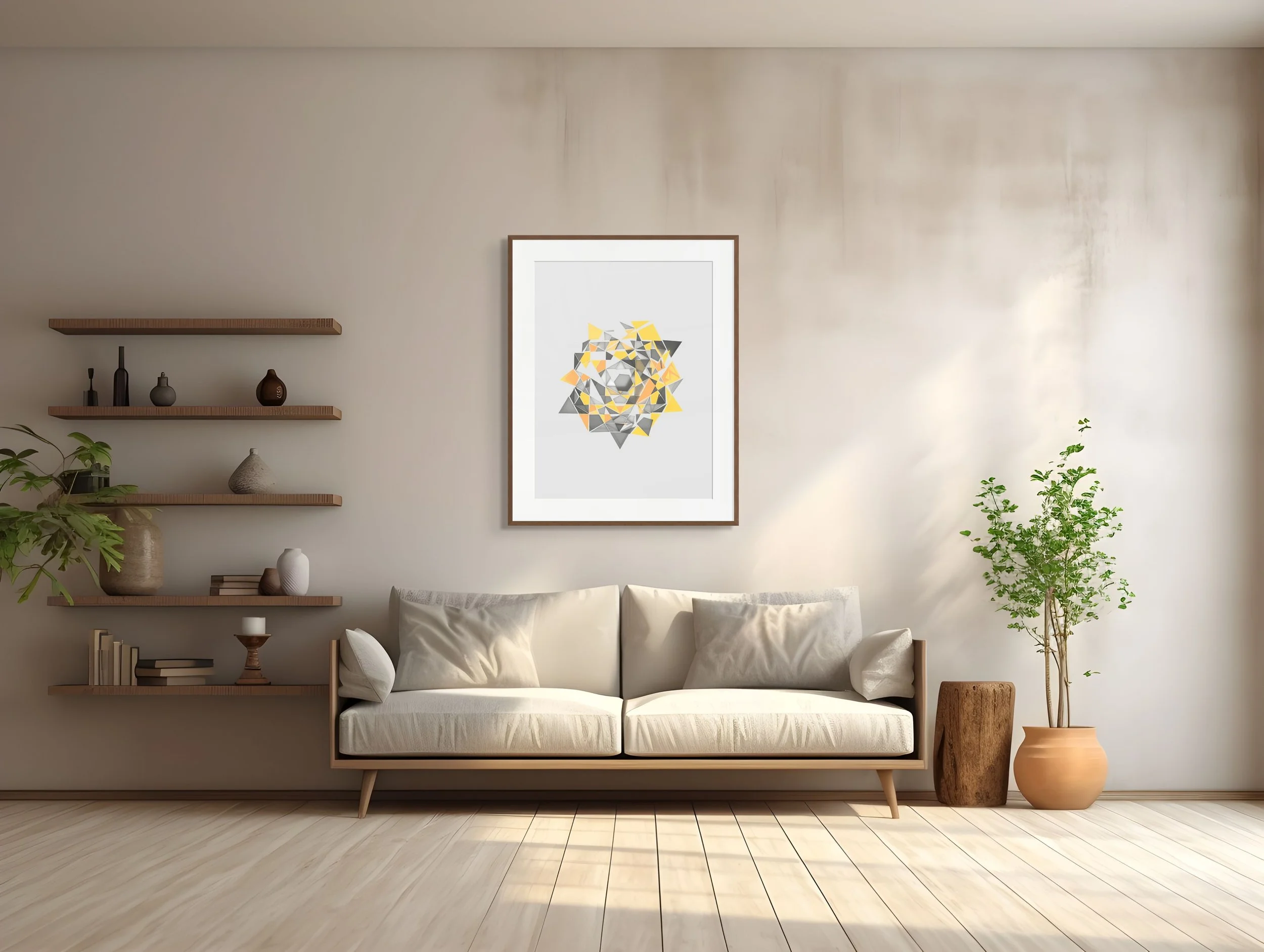
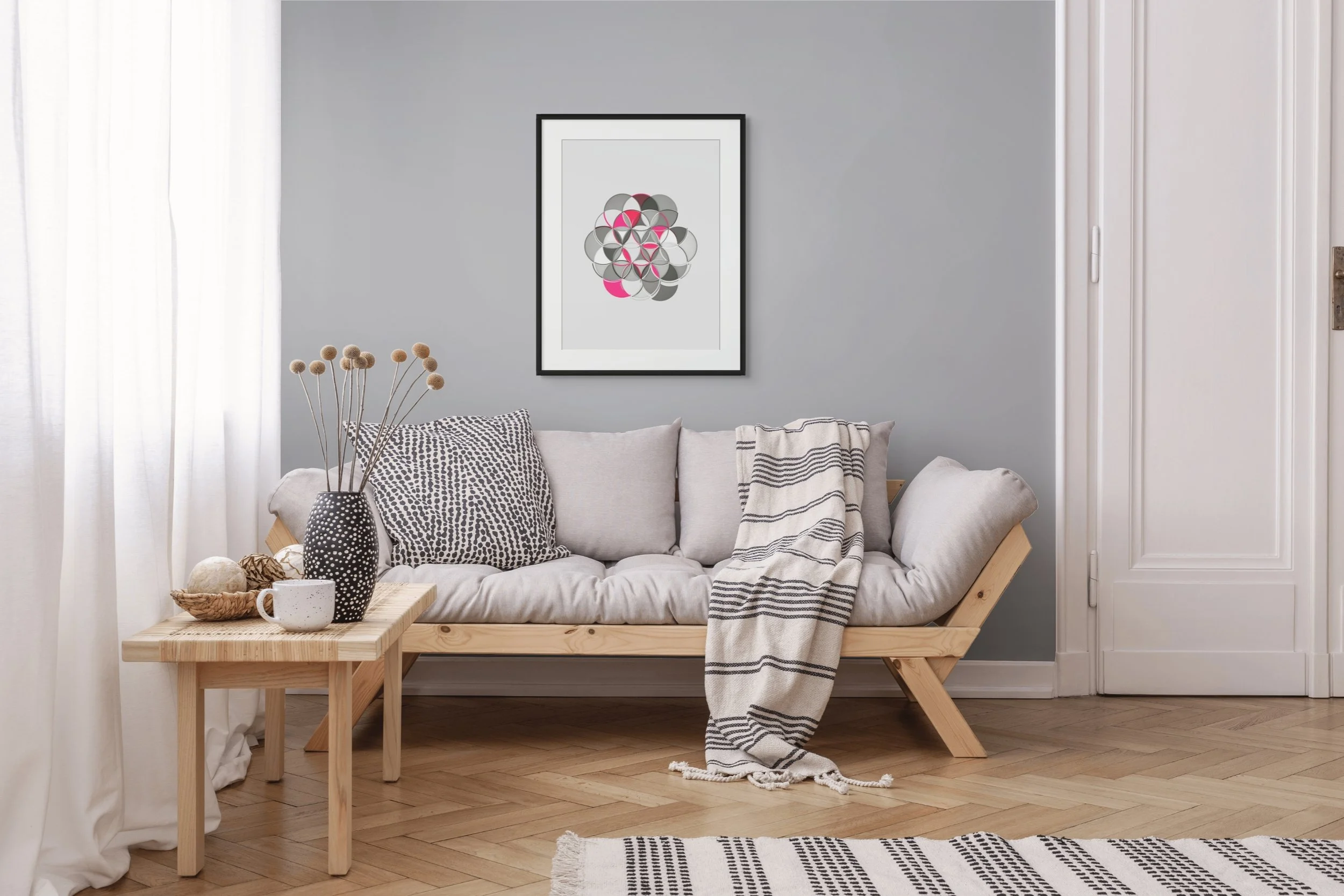
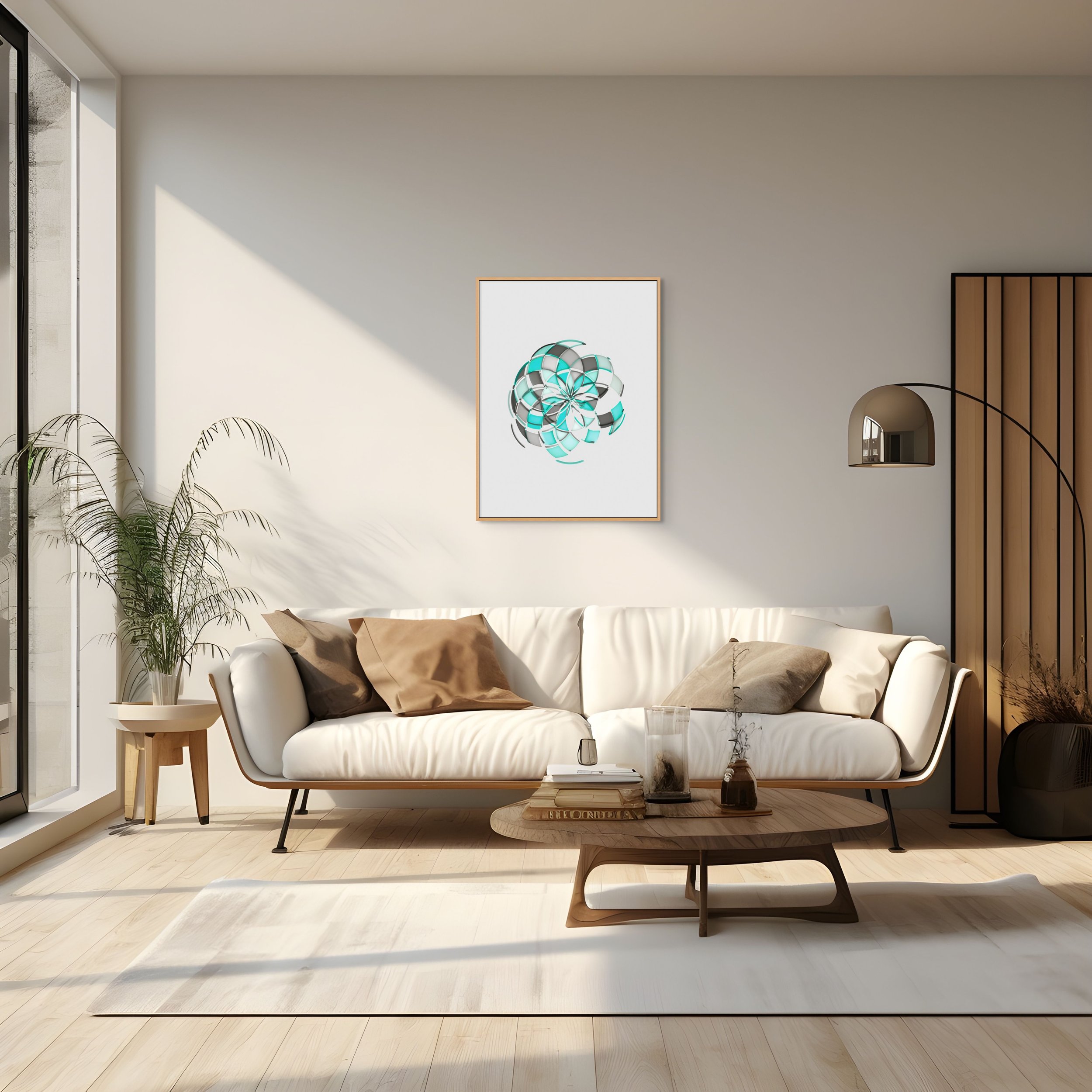
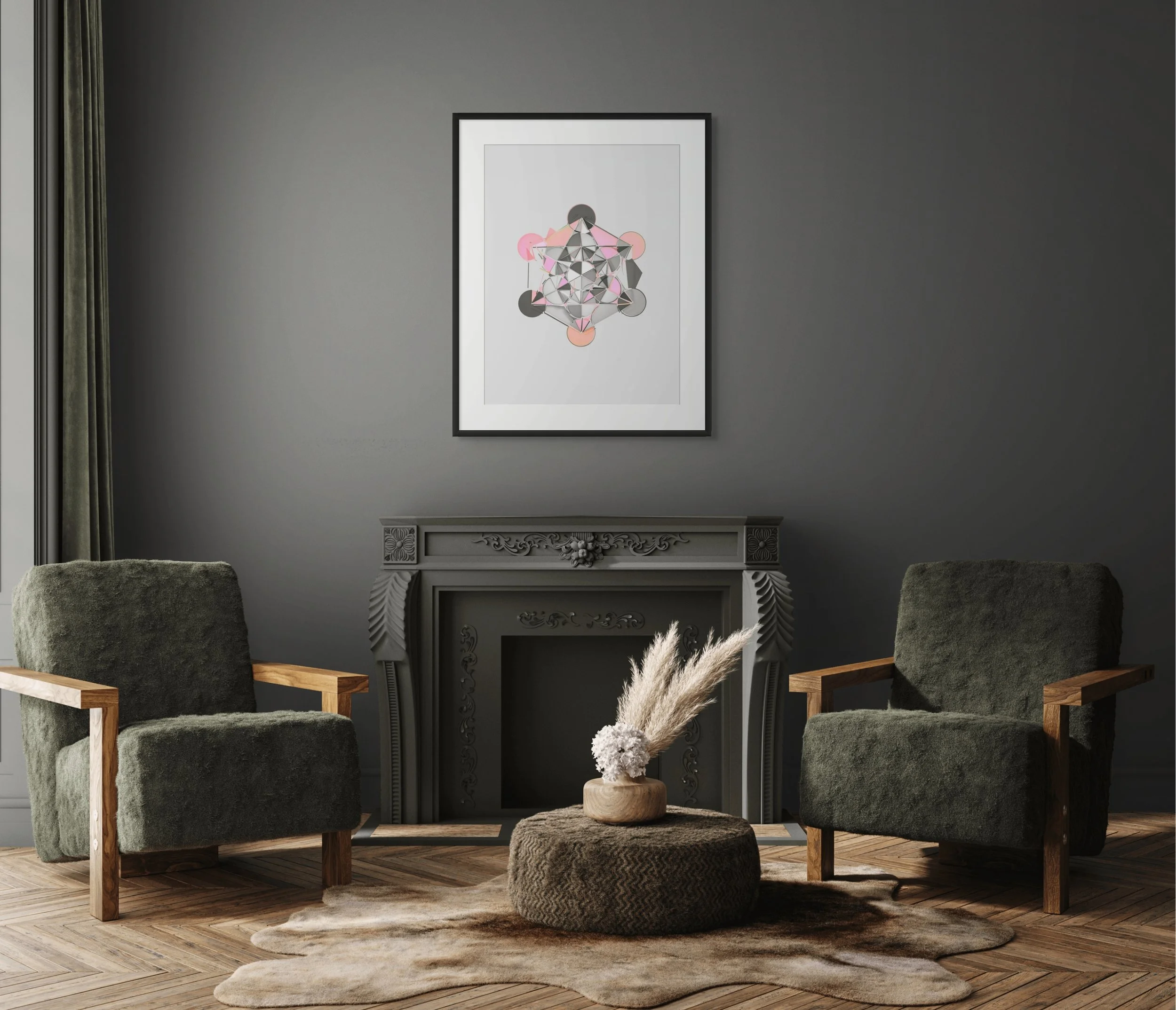
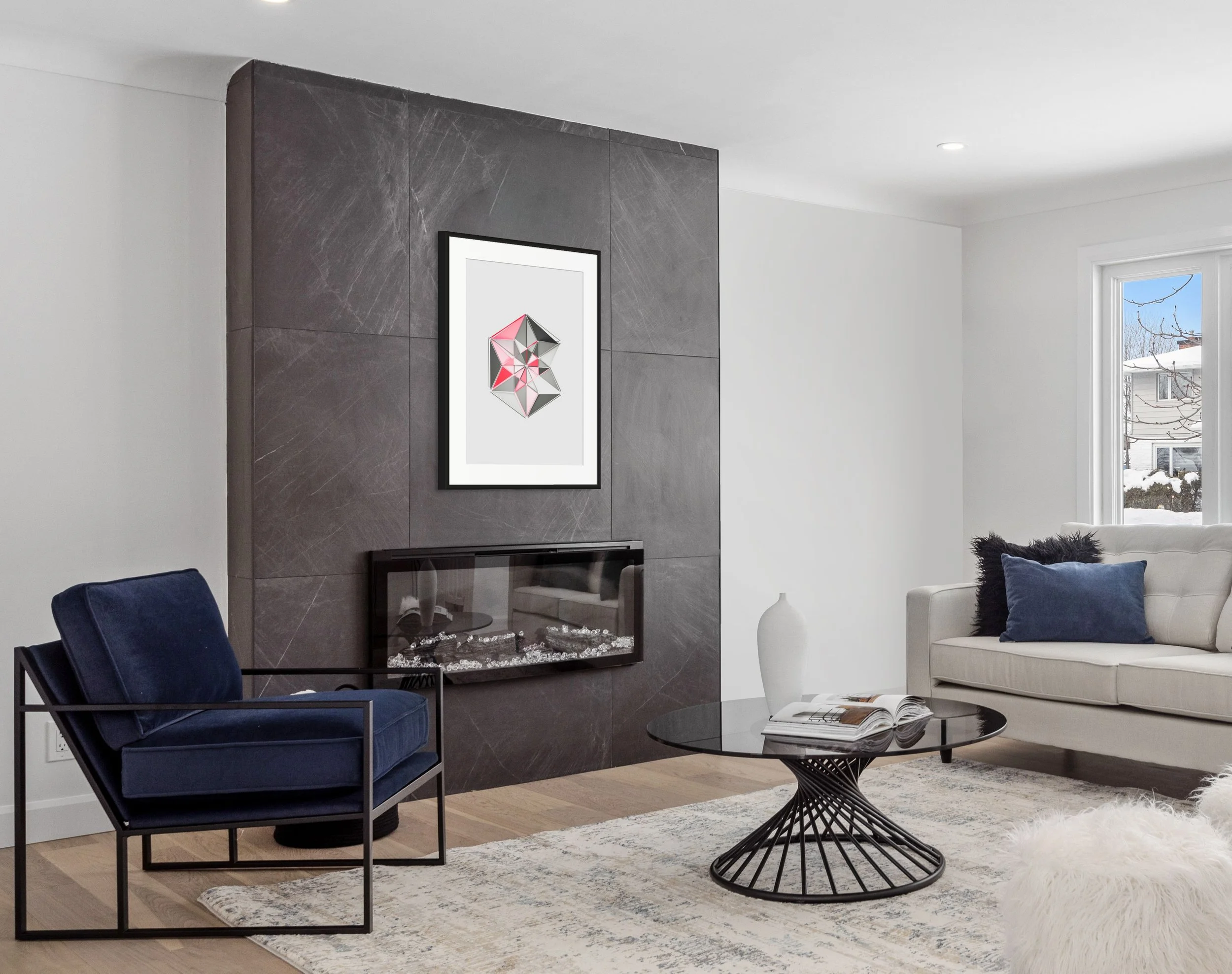
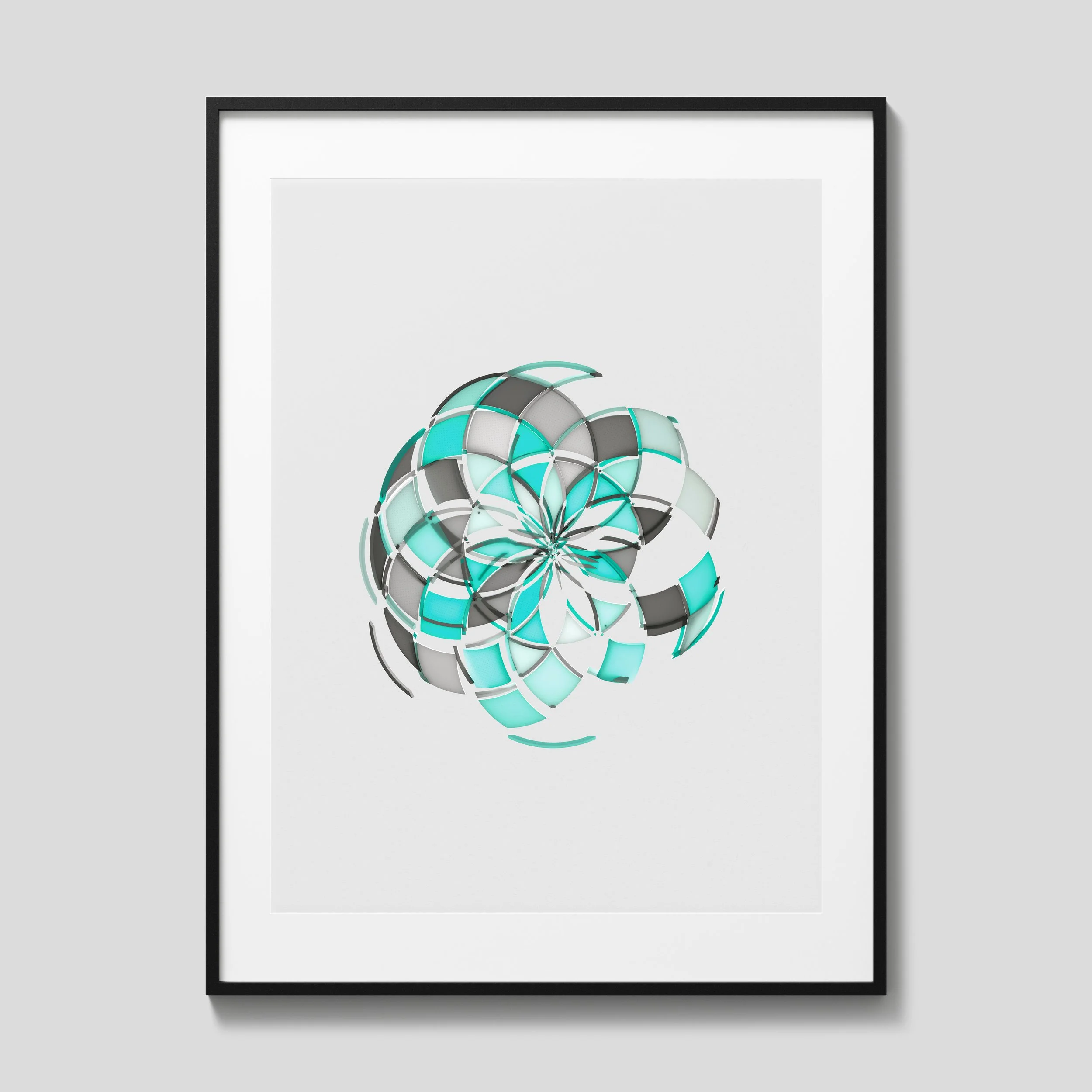
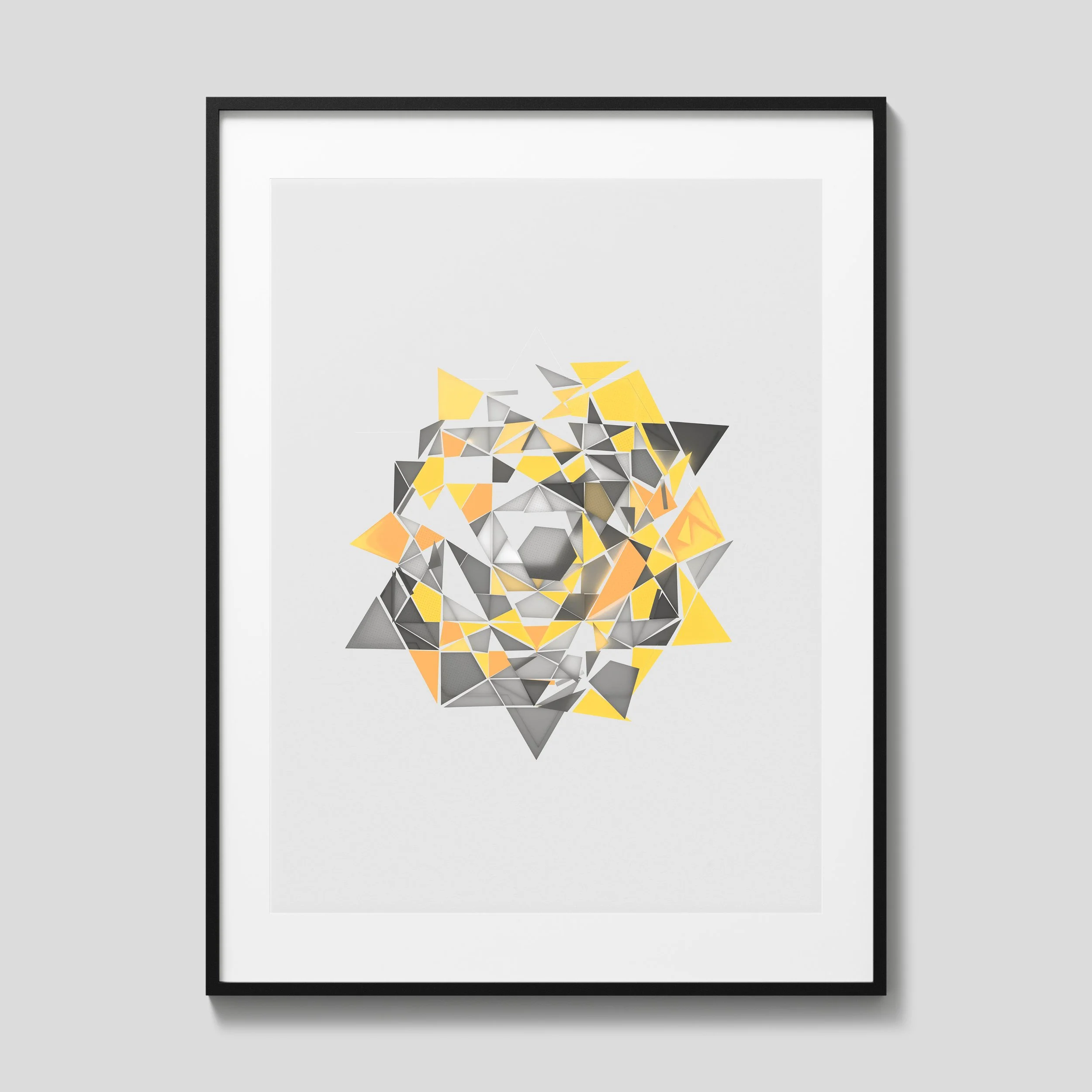
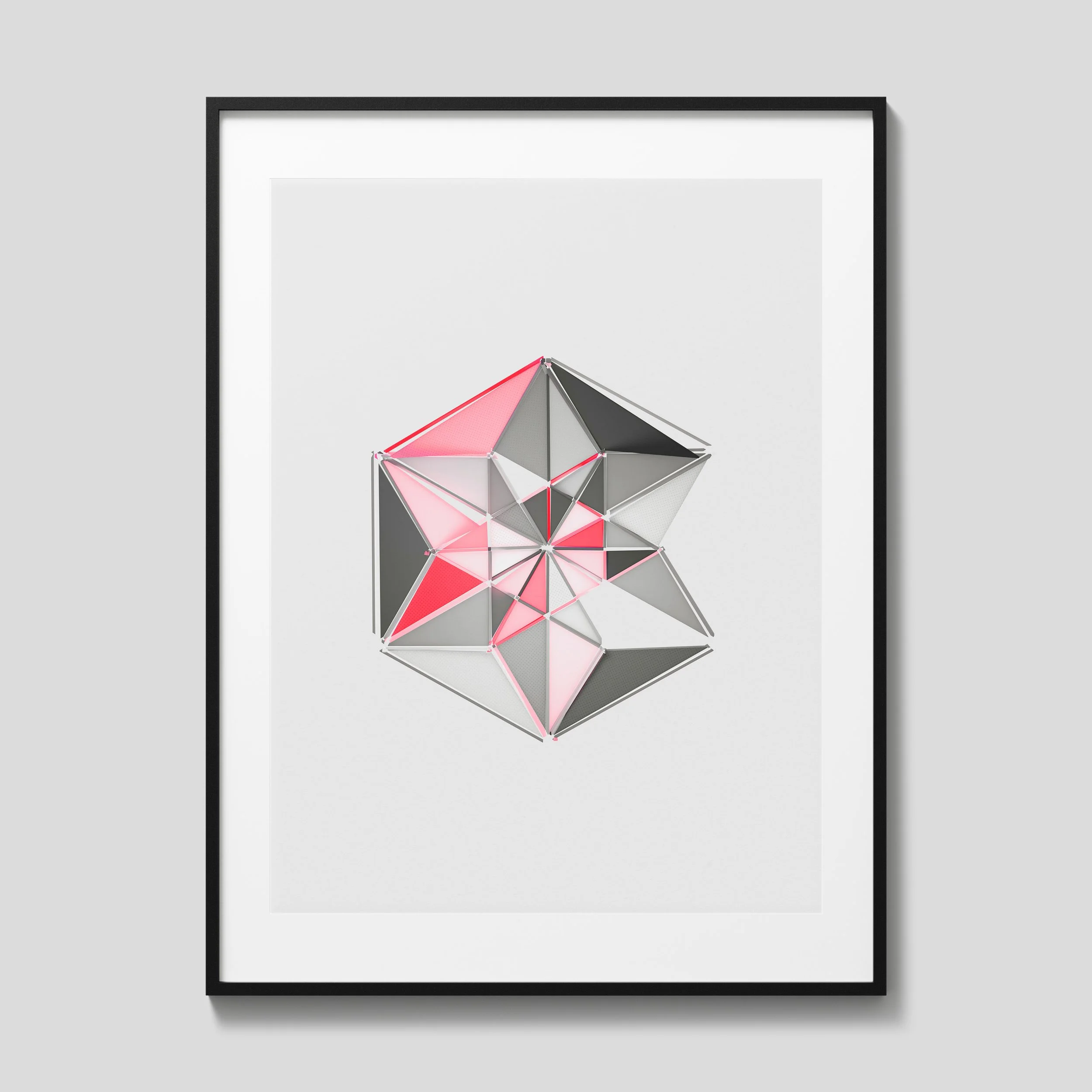
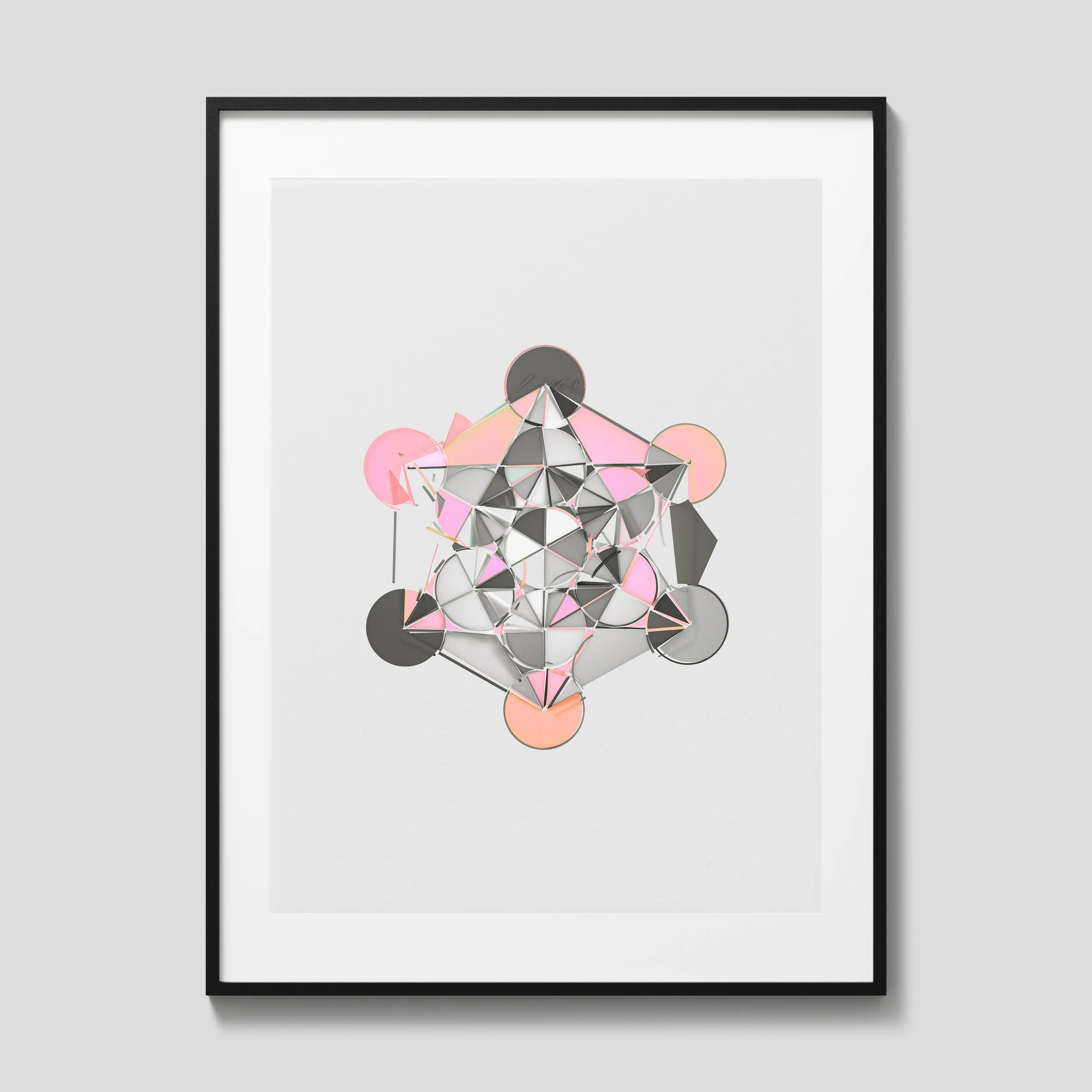
These five works called Metatron’s Cube, Flower of Life, Lotus of Life, Vector Equilibrium and Grid of Life are rendered in a visual language that is colder, more precise. Graphical and fragmented, they resemble Perspex constructions cracked under unseen tension. Muted tones of grey dominate, each accented by a single colour – suggesting focus, rupture, or intent. Here, the aesthetics of spirituality, geometry, and “truth” are stripped of their current meanings. The artist severs these forms from their associations with yoga, wellness culture, and sanitised mysticism, and instead implants their own worldview – one shaped by skepticism, technology, dissonance, and uncertainty.
This series is not a reclamation of purity, but a reoccupation. It challenges the idea that symbols are timeless or sacred. Desecrated Geometry: Part II is about authorship, bias, and the uneasy power of personal projection. If these shapes once held cosmic significance, what do they become when infused with the artist’s own doubts, aesthetics, and cultural inheritance? Are they liberated? Or simply rebranded under a new system of belief?
The answer, perhaps, doesn’t matter. What matters is the act itself: to take, to fracture, and to reshape. To desecrate – deliberately, and with eyes open.
Flower of Lies
Flower of Lies is a quiet subversion of the Flower of Life, a form long celebrated as a symbol of sacred harmony and divine order. Here, that familiar geometry is reworked – disrupted just enough to feel off, like a truth retold too many times. The artist exposes the seductive perfection of the original, questioning whether its beauty is a kind of camouflage. In this version, the petals don’t bloom they veil. The symmetry doesn’t reassure, it deceives. Flower of Lies challenges the assumption that meaning embedded in pattern is inherently pure or trustworthy. By altering the geometry and reframing it with a contemporary, graphic sensibility, the artist transforms the symbol into something more ambiguous: an aesthetic shell, open to reinterpretation, projection, and exploitation. This piece doesn’t just critique belief in the sacred – it exposes how easily beauty can become a vessel for myth, control, or gentle manipulation.
Lotus of Lies
Lotus of Lies takes the so-called Lotus of Life (a symbol of spiritual awakening and purity) and deliberately fractures its message. Traditionally used to evoke enlightenment and inner peace, the lotus here is altered, disrupted, and visually re-engineered. Its petals no longer unfold toward transcendence; they curl inwards, layered with tension, ambiguity, and self-interest. The artist turns this revered form into a vessel for personal reinterpretation, unmasking how spiritual symbols are often used to sell simplicity, serenity, and belonging – while obscuring complexity, contradiction, and doubt. Lotus of Lies doesn’t reject the form…it inhabits it, distorts it, and makes it complicit. By reshaping the geometry and co-opting its language, the artist exposes how even the most cherished icons can become tools of illusion – sweetened, simplified, and weaponised. This is not a rejection of spirituality, but a confrontation with its commodified performance.
Grid of Lies
Grid of Lies reworks the Grid of Life, a symbol often used to suggest order, stability, and the foundational logic of the universe. In this version, the structure remains but its certainty begins to slip. The lines are still present, but their meaning has been tampered with, co-opted, and quietly undone. What once claimed to reveal hidden truths now hints at manufactured clarity, a veneer of balance masking deeper dissonance. The artist presents the grid not as a guide, but as a cage. An architecture of belief shaped by repetition and reinforced by collective trust. Grid of Lies questions the authority of such patterns: who drew them, and why do we still follow them? In reconfiguring this sacred form with modern precision and subtle disruption, the artist exposes the comforting illusion of order. And the uneasy truth that not all structure is honest.
Vector Unequalibrium
Vector Unequalibrium distorts the pristine logic of the Vector Equilibrium (a form once hailed as the ultimate expression of balance, symmetry, and spatial perfection). In this reinterpretation, that balance is deliberately broken. Lines buckle, weights shift, and the illusion of harmony begins to falter. The artist dismantles the sacred geometry from within, exposing the impossibility of true equilibrium in a world shaped by bias, conflict, and imbalance. What remains is a structure still striving for order, but marked by strain – a visual metaphor for systems that appear fair, yet hide tension beneath their surfaces. Vector Unequalibrium becomes a subtle rebellion against idealism, a reframing of symmetry not as a goal, but as a myth we keep repeating. This is geometry at odds with itself, honest in its instability, and unapologetically human in its imperfection.
Metatron’s Mistake
Metatron’s Mistake reimagines the iconic Metatron’s Cube not as a divine map of creation, but as a fractured, commodified relic. Once revered in mystical traditions as a symbol of universal order, the geometry here is subtly shattered, its precision disrupted just enough to feel unstable, imperfect… human. The artist appropriates the form not to preserve its sacredness, but to reframe it entirely: softer, friendlier, even marketable. Stripped of its esoteric weight, the shape becomes a design object – appealing, consumable, and detached from its spiritual roots. In doing so, Metatron’s Mistake questions both the sanctity of symbols and the ease with which they can be repackaged for new audiences. It’s a deliberate error, a playful corruption, and a quiet rebellion against inherited meaning – posing the unsettling question: is it still sacred if we prefer it this way?
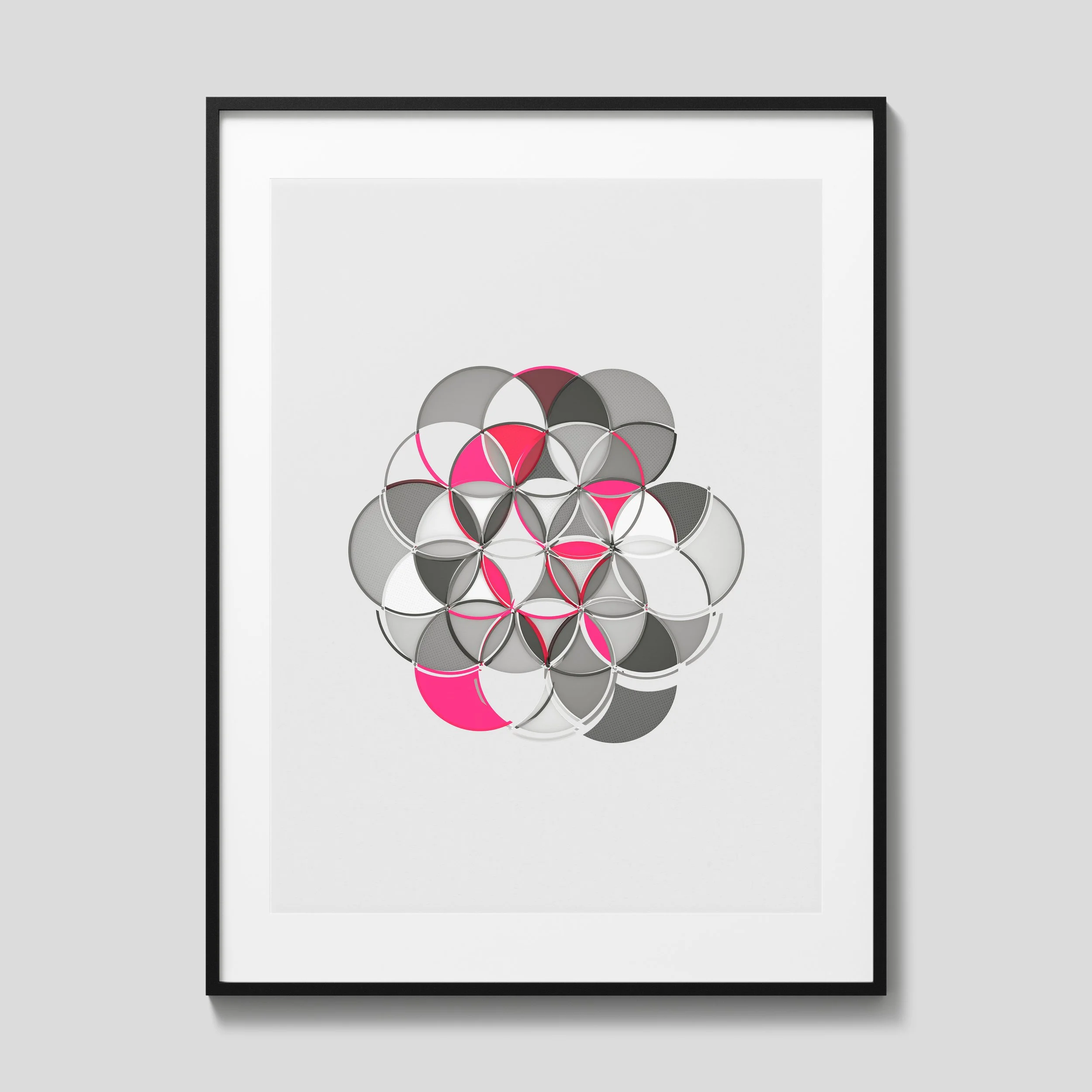
Available in three sizes. Printed on archival art print Ilford textured paper