The End of the World, Again.
The End of the World, Again is a series of brooding abstractions that tap into a familiar but rarely spoken truth: humanity is obsessed with its own ending. Not with death itself, but with apocalypse – the grand finale, the collapse, the quiet (or catastrophic) undoing of everything. These six works do not illustrate the end times in any literal sense. Instead, they evoke the psychological atmosphere surrounding them: dread, absurdity, denial, desire.
Each piece is a visual distillation of that anxious hum beneath daily life – the quiet suspicion that things are falling apart, and the perverse comfort in imagining they might. The forms are murky, moody, and immersive, offering not answers, but recognition. There is terror in these works, yes, but also camaraderie. If you’ve ever lain awake thinking about melting ice caps, financial collapse, alien invasion, or just the weird hum of being alive… you’re not alone.
There is, too, a touch of comedy. After all, isn’t it strange that we trade our time, our finite live, for images of our own doom? And then hang them, proudly, above the sofa? These works acknowledge that contradiction, and celebrate it. They are monuments to shared fear, existential farce, and the aesthetics of collapse.
The End of the World, Again isn’t just about apocalypse. It’s about how strangely human it is to prepare for the end while curating your wall space.
Henny Penny
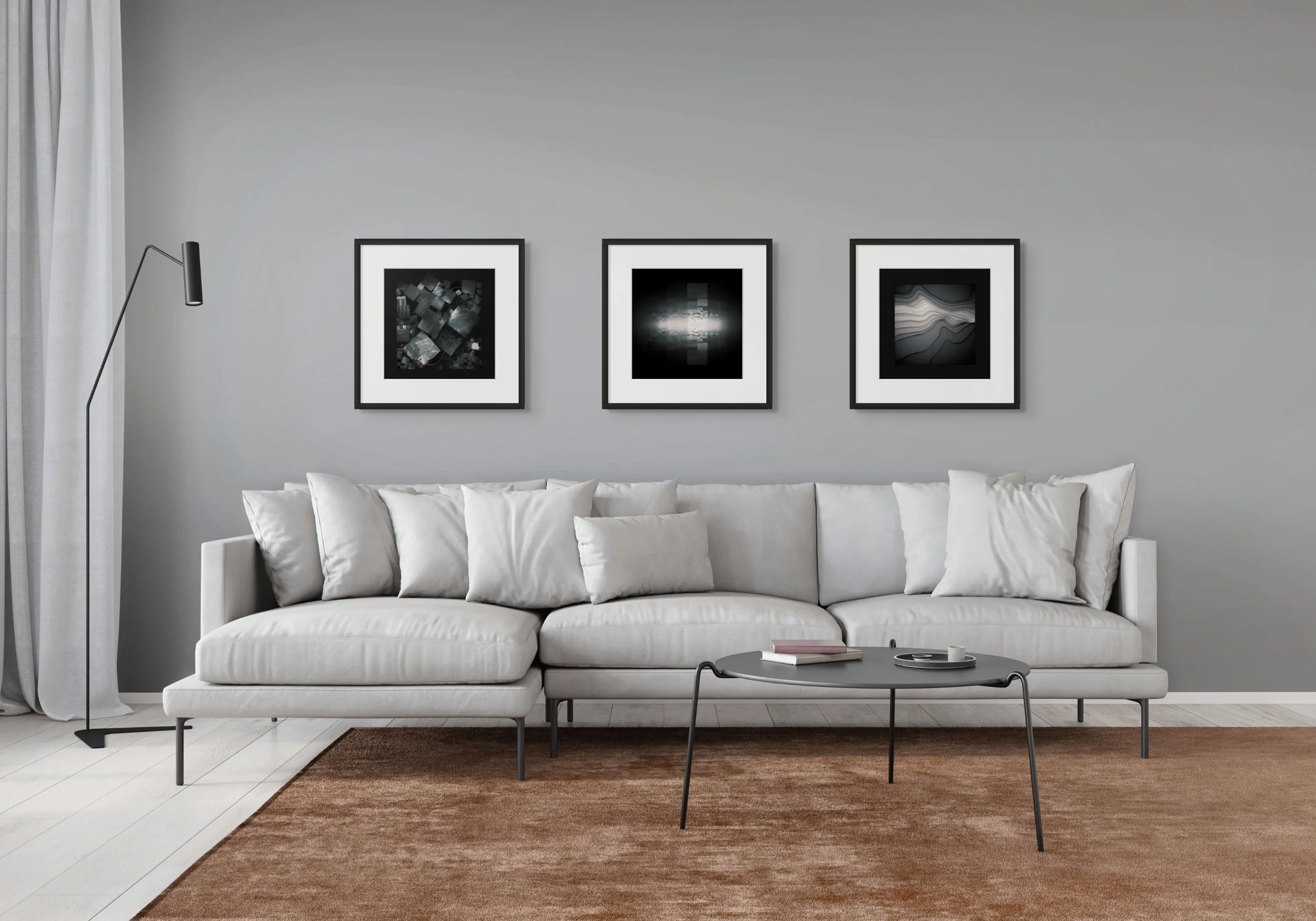
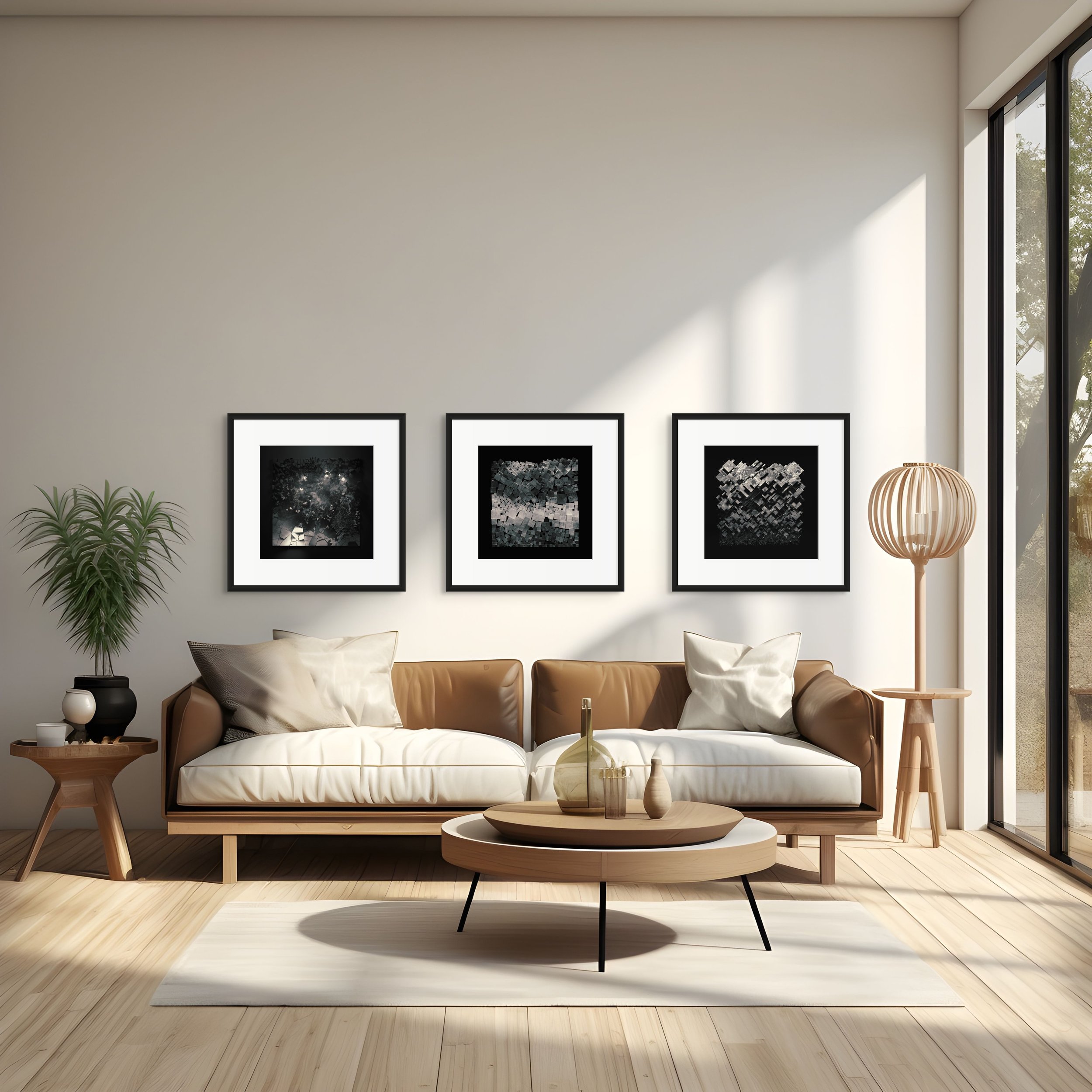
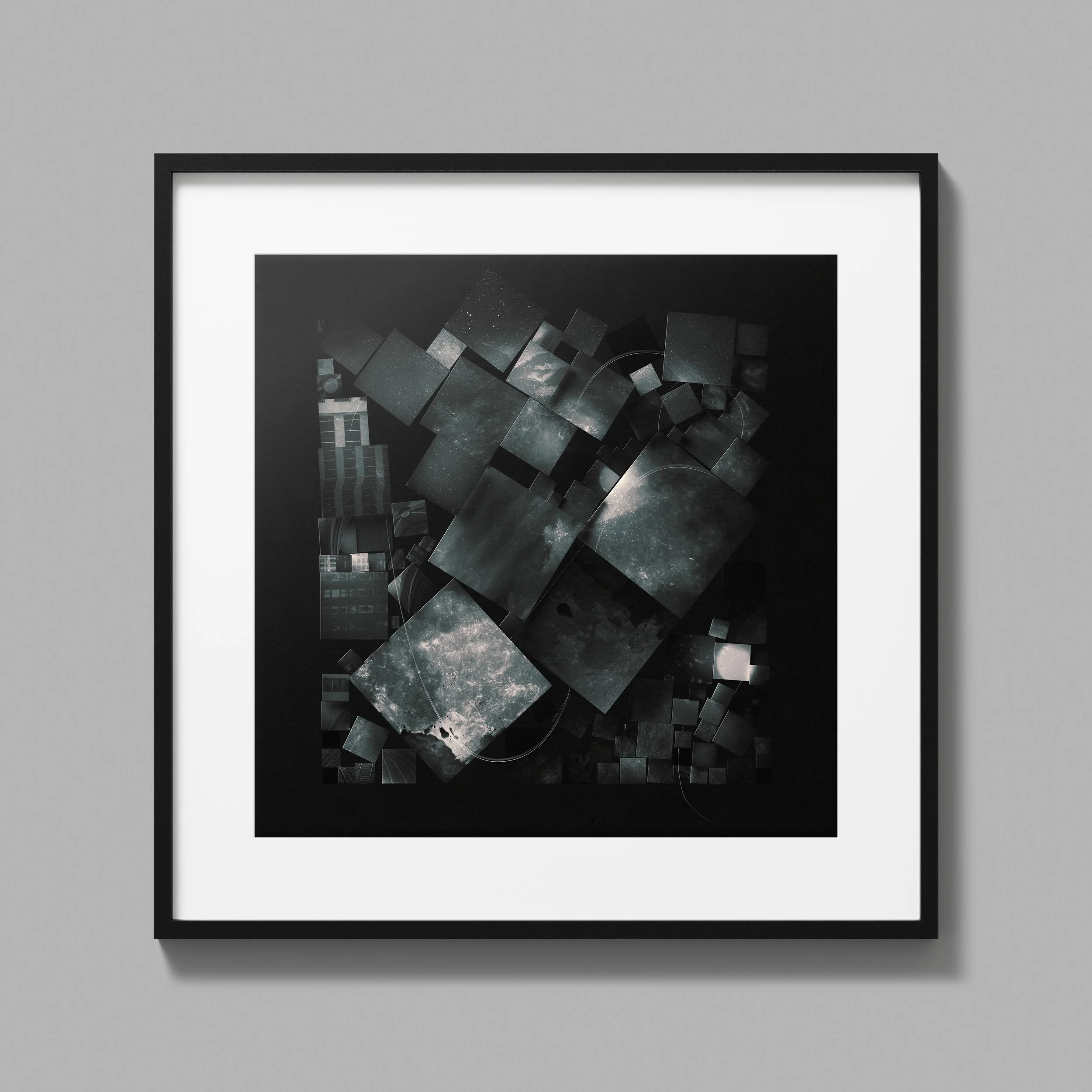
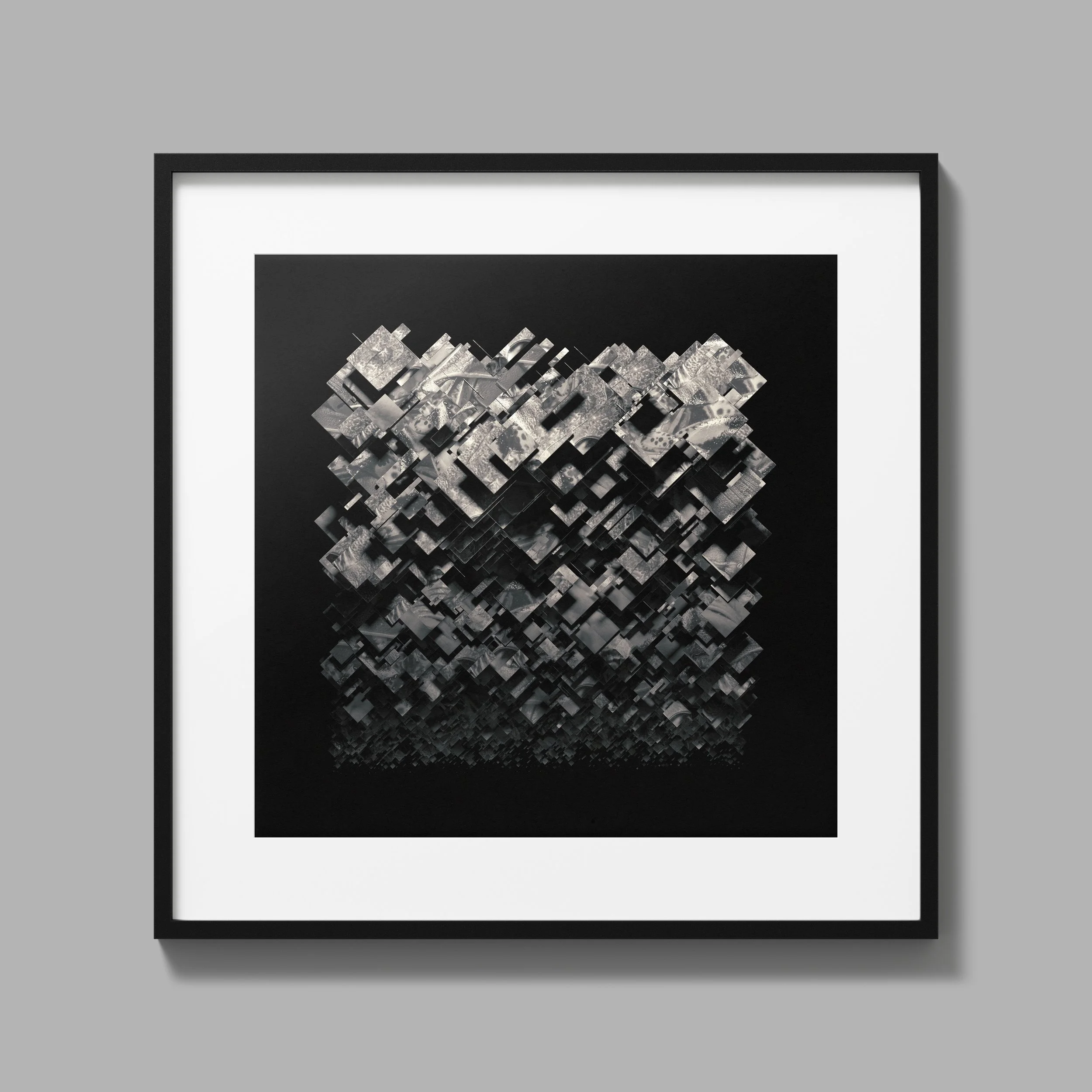
A nod to the childhood tale where panic spreads with the cry, “The sky is falling!”, this piece explores the persistence of that fear in the adult psyche. Shadowy blocks descend into a void, not as literal debris, but as psychological architecture crumbling. There is no sky here, only suggestion: weight, collapse, and the invisible force of dread. Henny Penny isn’t about disaster itself, but the human readiness to believe in one. It captures that strange blend of fear and anticipation, absurdity and sincerity, that makes us watch the horizon… and wonder if it might finally fall.
Stage Five
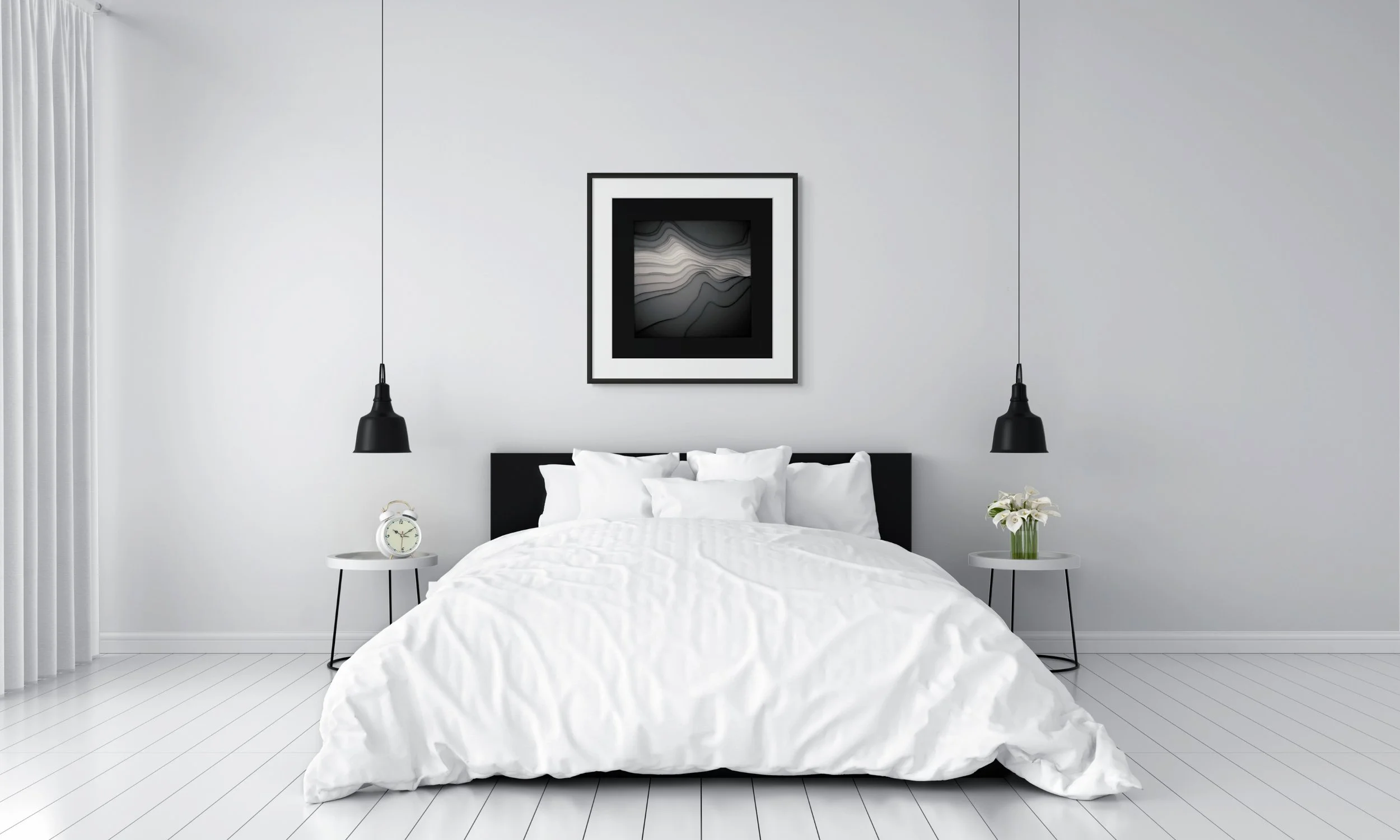
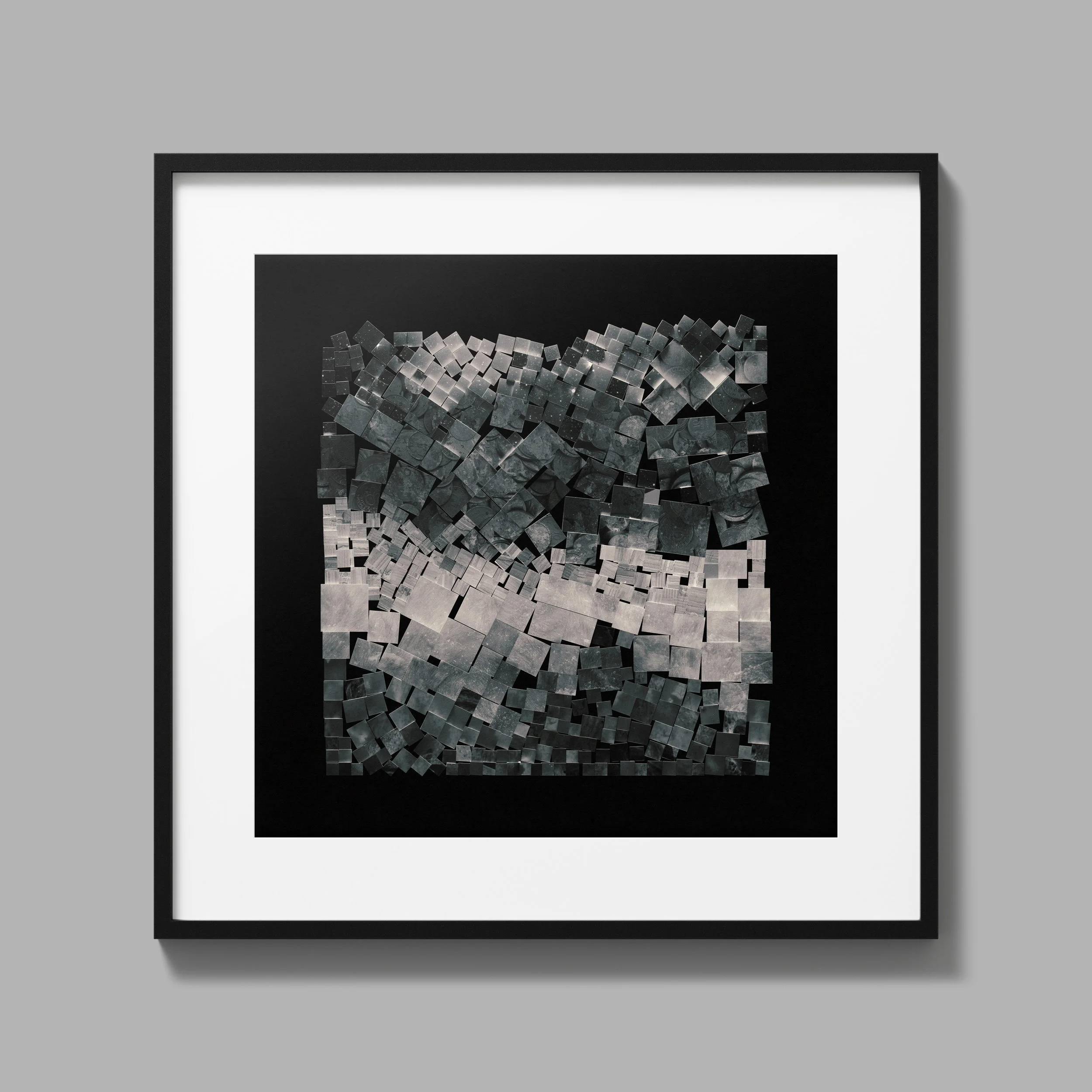
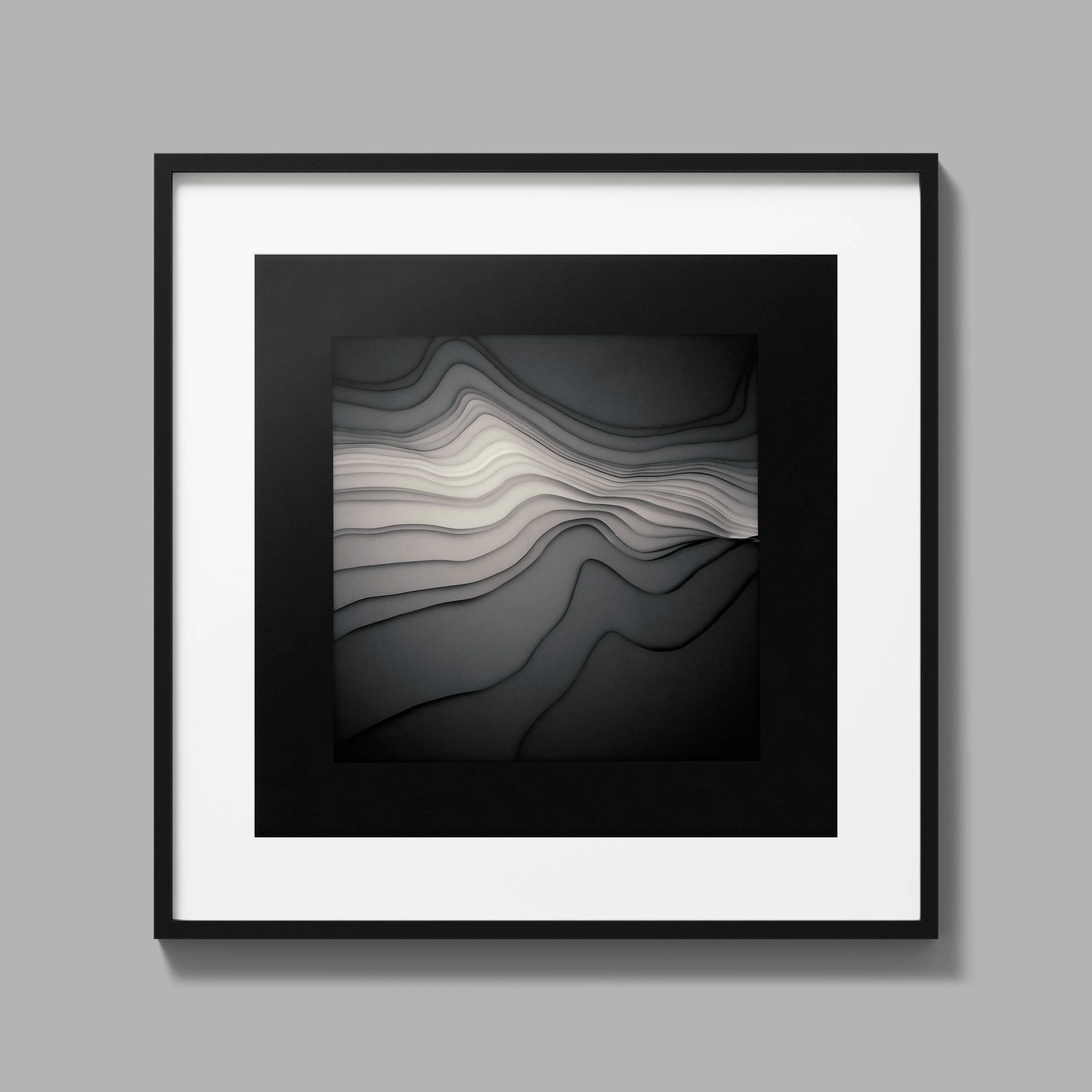
Inspired by Adam Smith’s four-stage theory of societal development (hunting, herding, agriculture, commerce) this work proposes a fifth. The image evokes a cross section of sedimentary rock, each stratum compacted with the weight of human history. Layer by layer, it charts our evolution: from primal survival to structured society to the machinery of trade. But the topmost layer, (Stage Five) is fractured, unfinished, and opaque. It resists definition. Is it the birth of something new, or the fault line of collapse? With artificial intelligence looming as our next epoch, Stage Five asks: what happens when the next layer isn’t laid by human hands?
Four Horsemen
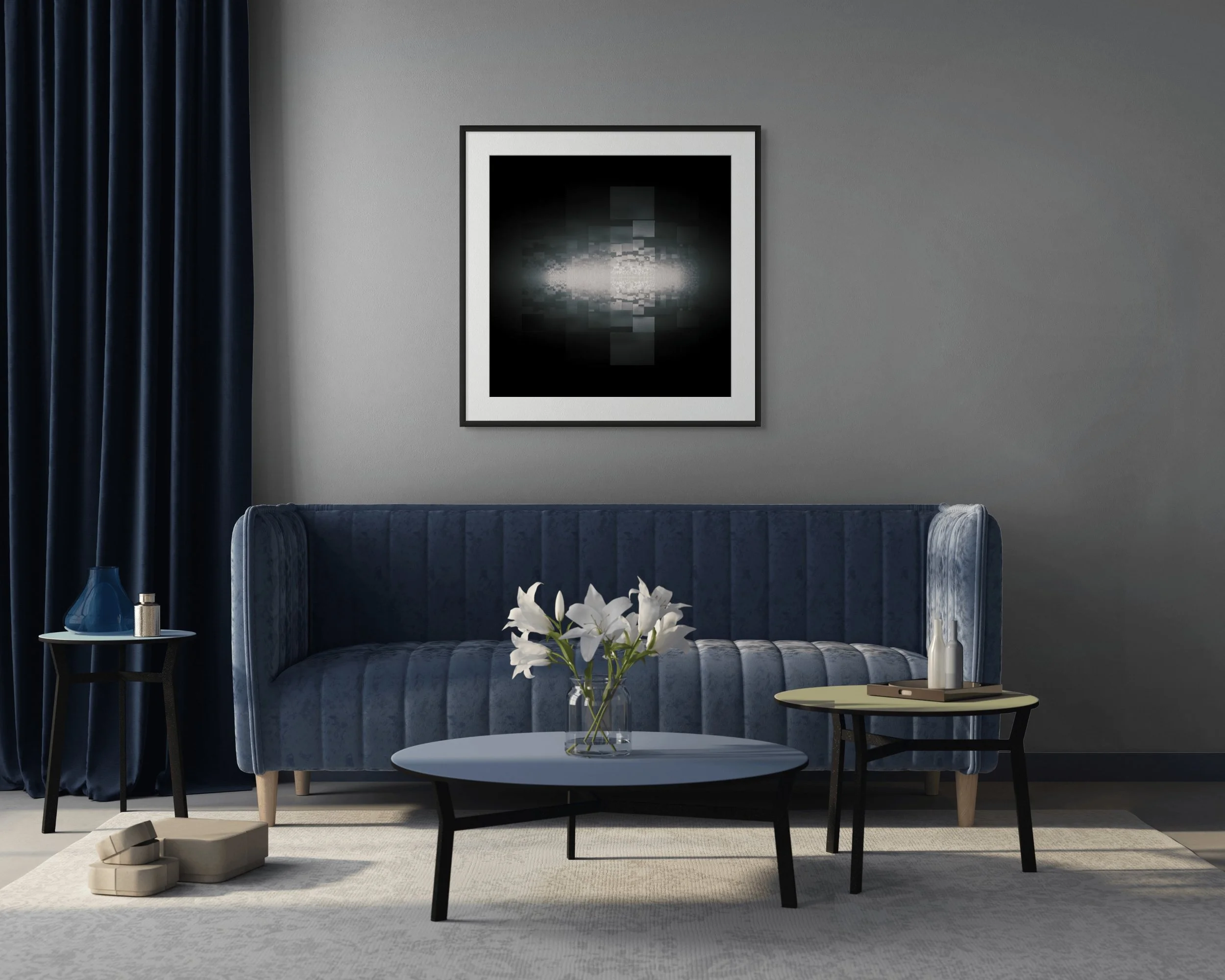
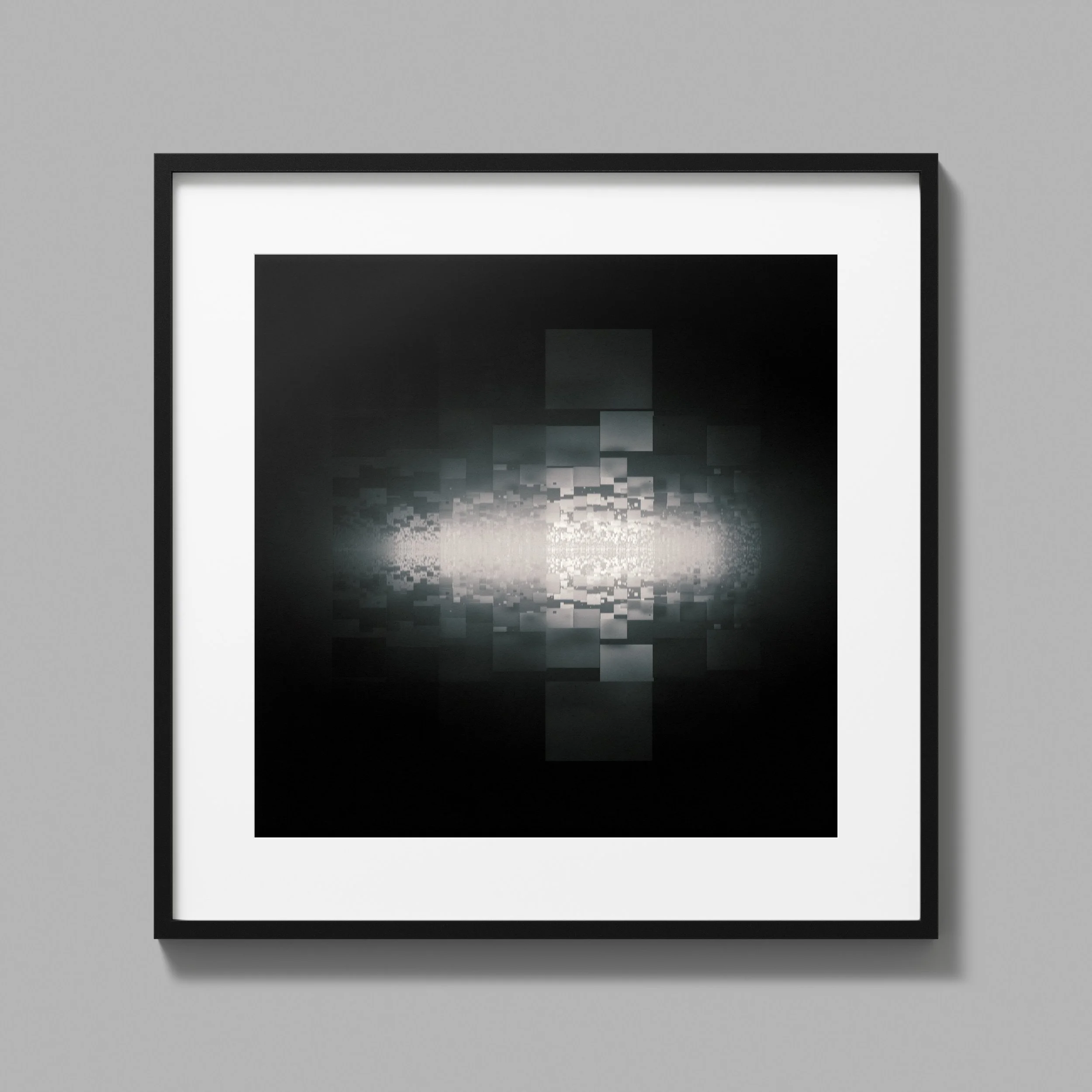
Not riders charging across a battlefield, but a glow distant and spectral, lingering on the edge of perception. Four Horsemen reimagines the apocalyptic figures as a quiet, persistent hum in the collective psyche. Rendered abstractly, this image rejects drama for unease, spectacle for suggestion. The glowing horizon cuts through a field of darkness, not as warning, but as presence – subtle, patient, and inescapable. Rather than galloping toward us, these horsemen may already be here: integrated, assimilated, unremarkable in their arrival. A soft conquest. The end, perhaps, not as explosion but as slow, silent takeover. A flicker in the rearview that never goes away.
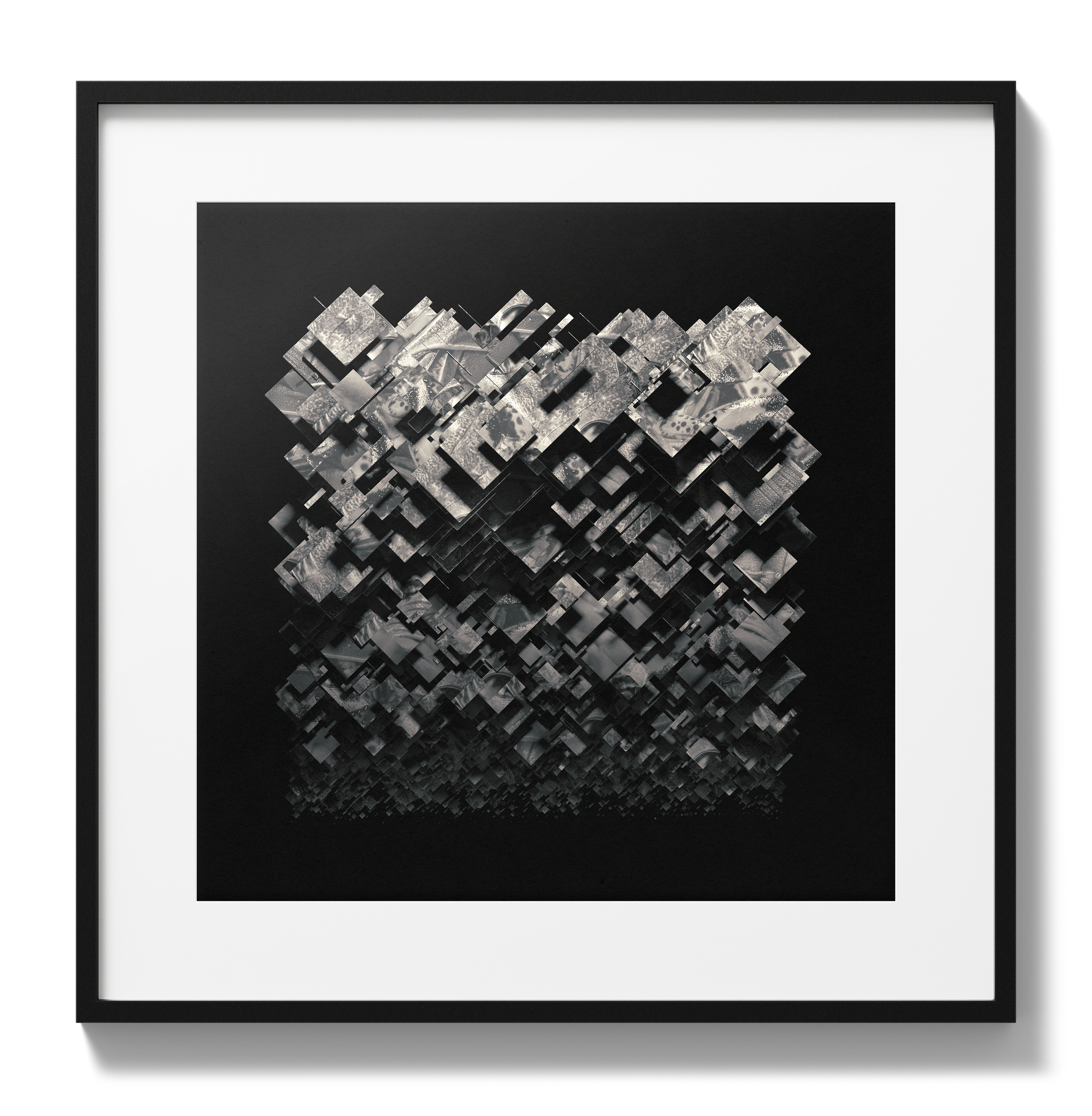
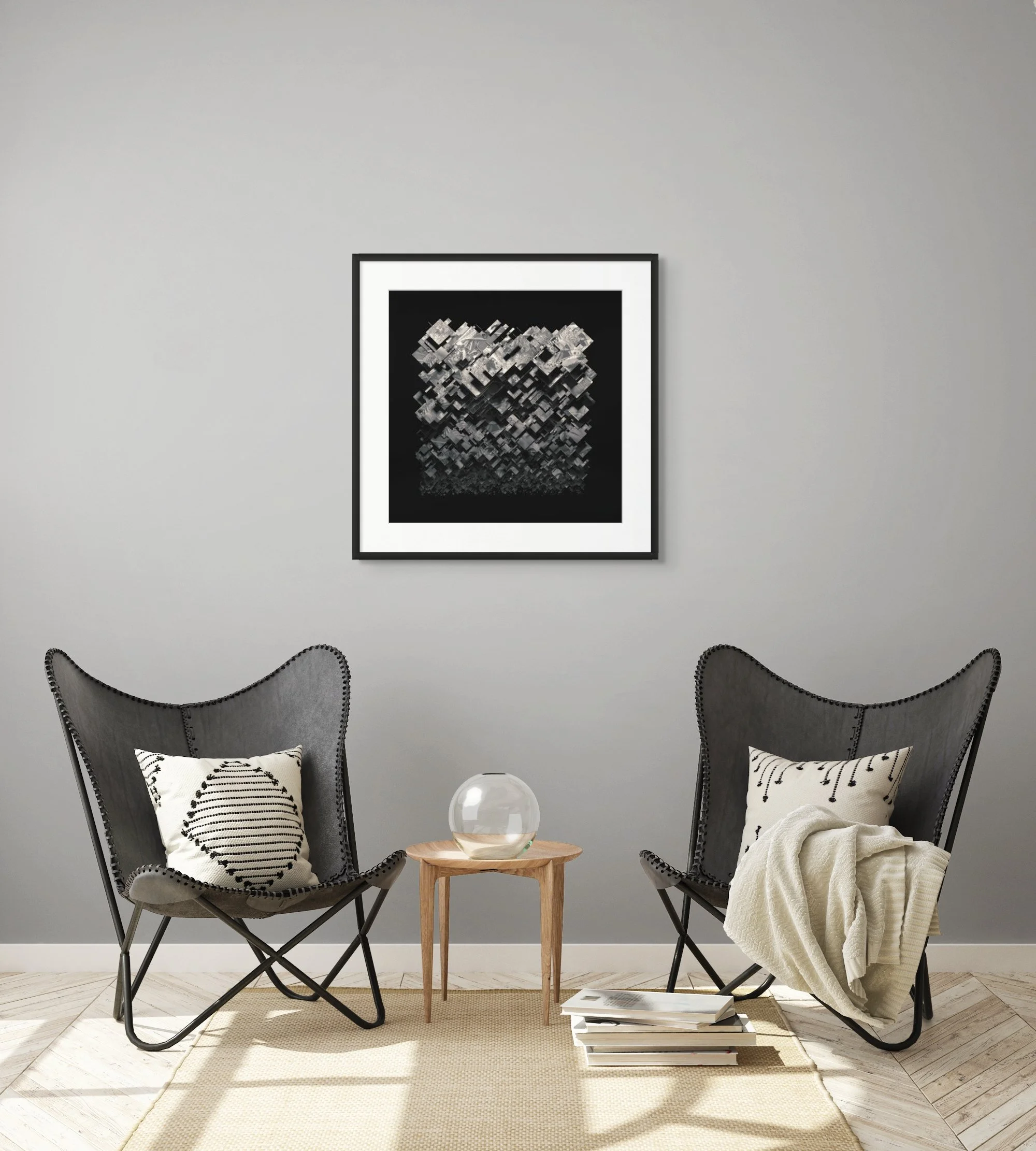
Swarm
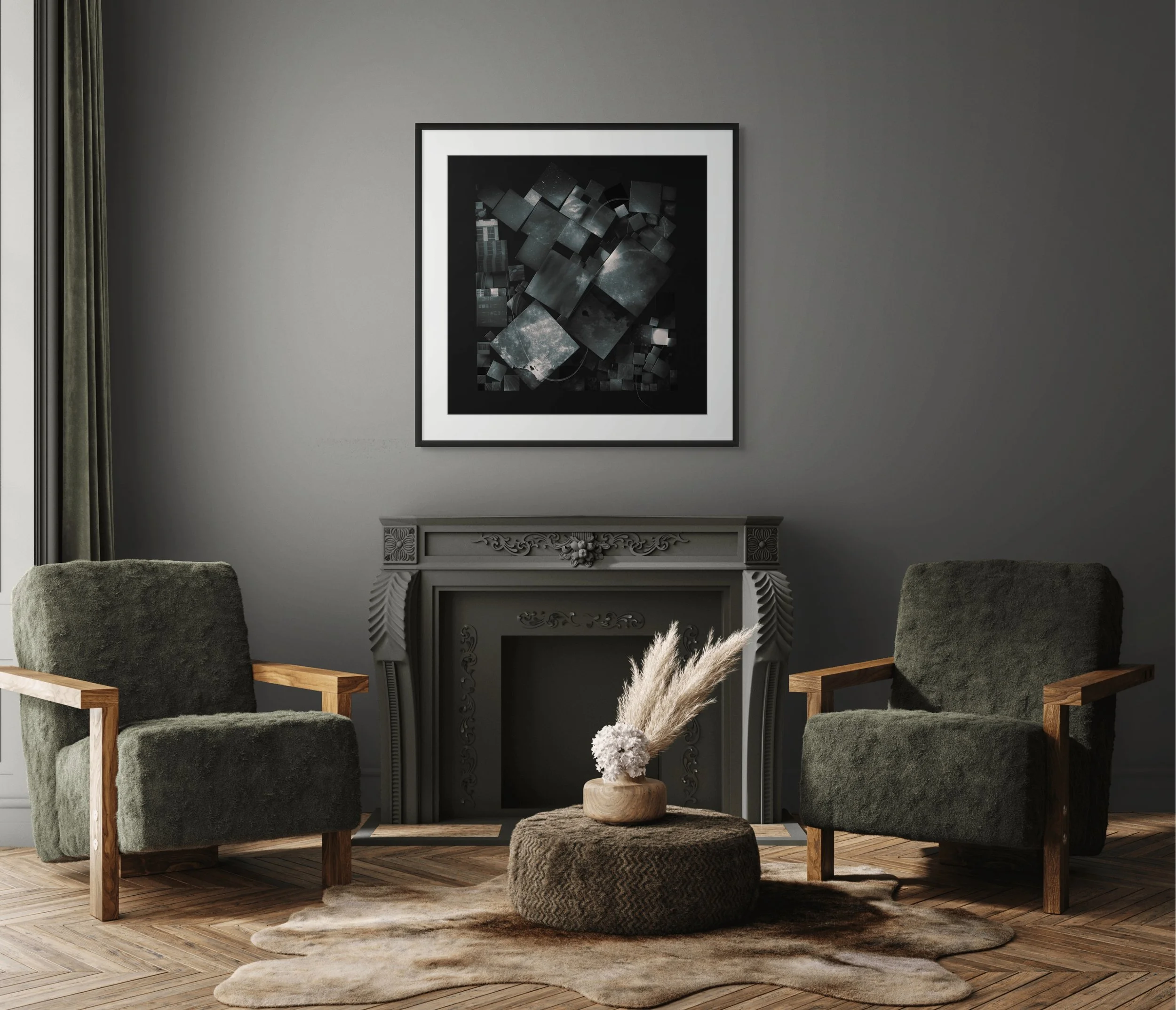
Inspired by biblical plagues and the chaotic precision of locusts, Swarm visualizes an invasion not of the world but of the mind. Hundreds of diamond-shaped forms surge forward, layered and relentless, as if descending upon the viewer. There is no centre, no rest – only movement and accumulation. This is not an external threat, but the churn of irrational fears, magnified and multiplied. The image captures the moment when thought collapses into noise, when anxiety becomes architecture. Dark, abstract, and disorienting, Swarm suggests that sometimes the apocalypse doesn’t arrive from the sky – it rises from within, disguised as everything we’ve been trying to ignore.
Ecological
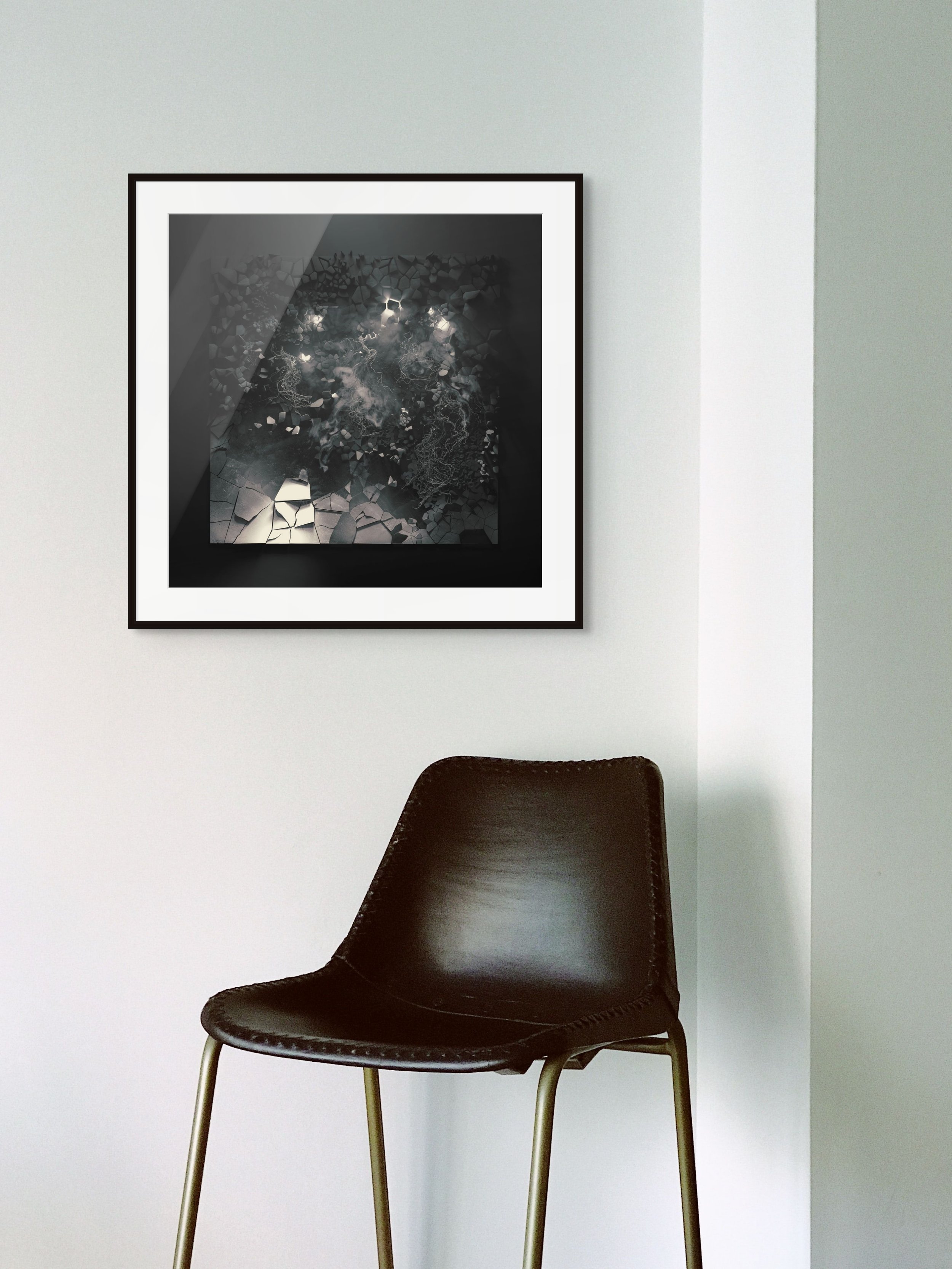
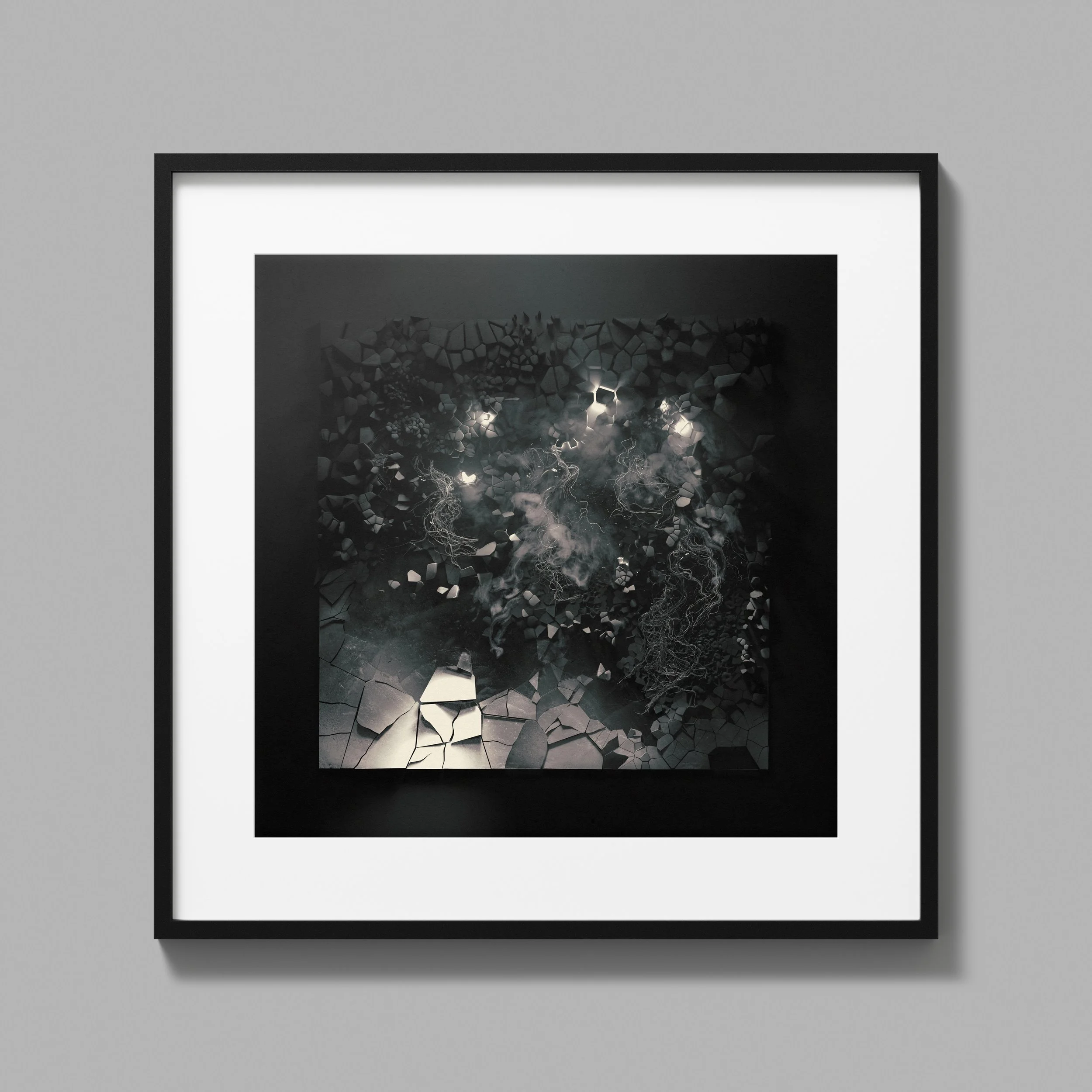
From above, the world looks still but not at peace. Ecological presents a fractured aerial vista: cracked ice shelves, drifting smoke, scorched terrain. Dark pillars (part ruin, part architecture) rise like scars across the landscape. Three organic forms lie ensnared in cables or tendrils, neither living nor free. Here, the Earth is both stage and casualty. Tiny lights flicker across the surface – fragments of life, or memory, or resistance. This is not just environmental decay, but existential disorientation. A portrait of a planet in peril, and the psychic unraveling that follows. Home is still visible, just barely. But it no longer feels inhabitable.
Inferno
A quiet descent, rendered in precise, graphic strata. Inspired by Dante’s vision of layered damnation, Inferno reimagines hell not as fire and torment, but as a slash – clean, controlled, and unrelenting. Each layer, and its sublayer, suggests another tier of worry, another hidden anxiety waiting just beneath the surface. The image captures the recursive nature of fear: as soon as one is named, another emerges. It’s less a fall than a slide – smooth, silent, inevitable. Inferno speaks to the mind’s own underworld, where torment comes not from punishment, but from the impossibility of ever truly reaching the bottom.
Available in two sizes.
Printed on archival art print Ilford textured paper.
Worldwide shipping.